Aug 12, 2026Buying Guides
How to Select a Layflat Water Hose by Pressure, Material and Application
A practical B2B selection framework covering working pressure, burst pressure, material, diameter, abrasion, temperature and connection requirements.
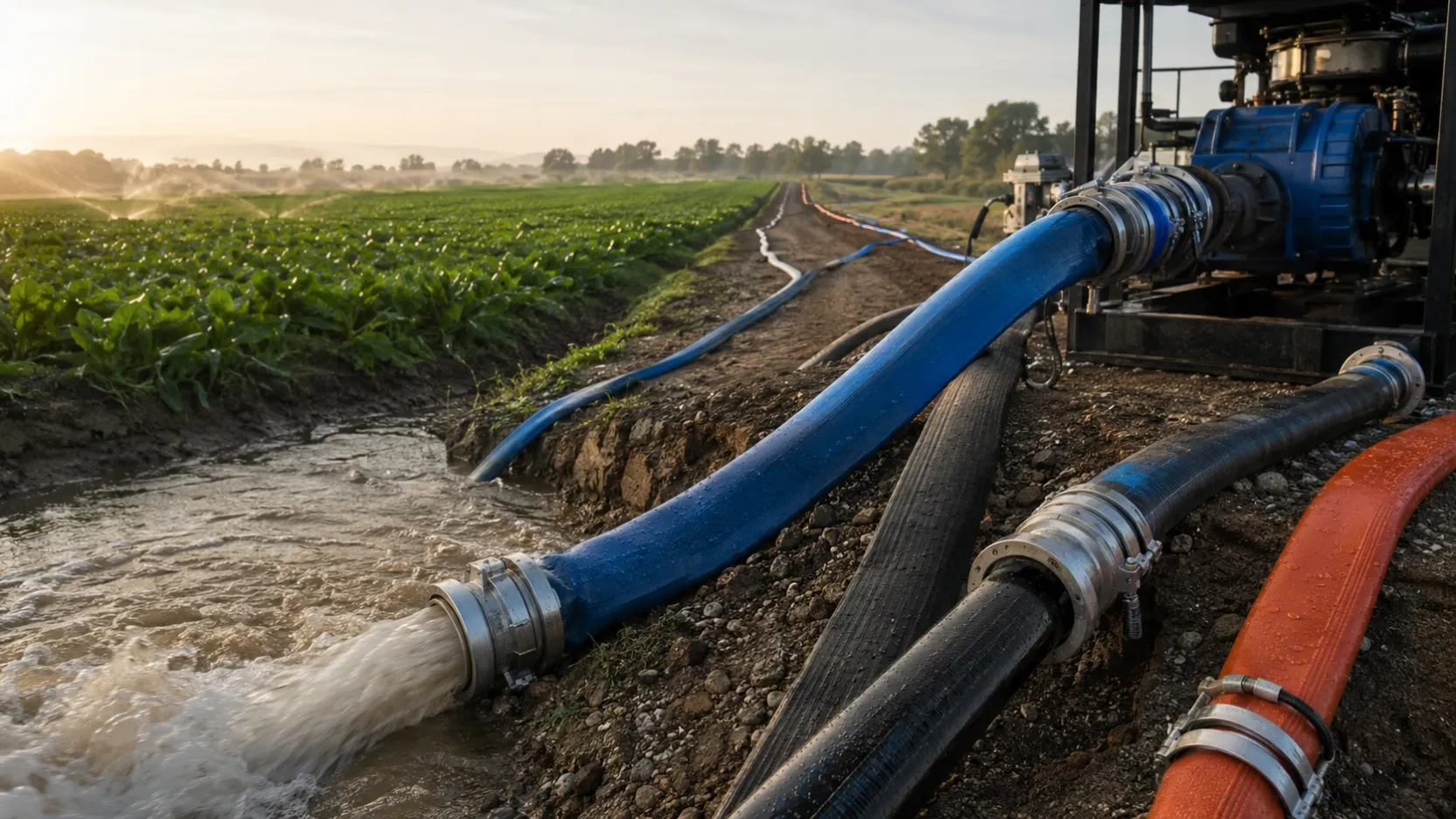
Choose a layflat water hose from the operating conditions first. The minimum selection brief is the application, transported medium, required flow, inside diameter, continuous working pressure, surge exposure, route length, temperature, dragging frequency and connection method. Color is a customization choice, not a performance specification.
1. Define the application and route
Irrigation, drainage, dewatering, pump discharge and fire-support duties can place different loads on a hose. Record whether the line is temporary or fixed, how often it will be moved, whether it crosses abrasive ground, and whether vehicles or equipment may contact it. These facts narrow the suitable construction before price is compared.
2. Size the inside diameter from flow and route length
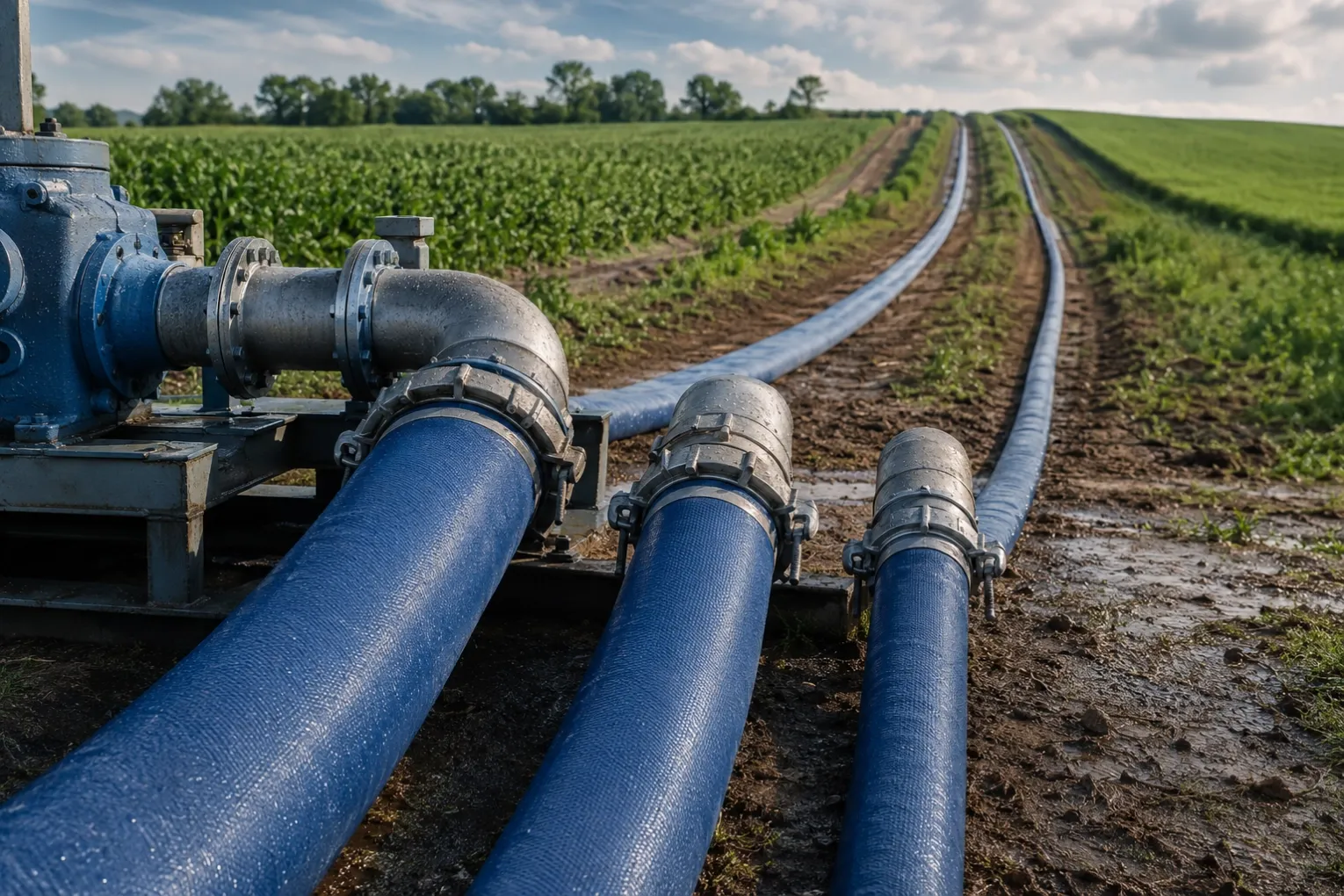
Inside diameter affects flow capacity and friction loss. Give the supplier the required flow, total route length, elevation change and pump connection size. Do not select diameter only from the pump outlet: a long route can require a different system check from a short discharge line.
3. Separate working pressure from burst pressure
Working pressure is the continuous service value used for normal selection. Burst pressure is a separate test or failure-limit value and is not the recommended operating pressure. Include pump start-up, valve closure and other surge conditions in the duty description so the pressure class is not chosen from a steady reading alone.
4. Compare material and construction
PE woven layflat hose combines polyethylene layers with woven reinforcement for lightweight irrigation, drainage and repeated outdoor handling. Lined woven hose families use a separate liner and textile jacket and are offered for different pressure classes. PVC layflat and suction or spiral constructions solve other transfer and vacuum-related requirements. Match the construction to the duty instead of treating all flat hoses as interchangeable.
5. Check abrasion, temperature and connections
Dragging, sharp ground, UV exposure, temperature and coupling loads can change field life even when pressure appears correct. Confirm the expected surface, temperature range, coupling type, clamp or crimp method, bend conditions and whether the hose will be stored outdoors.
6. Prepare the RFQ
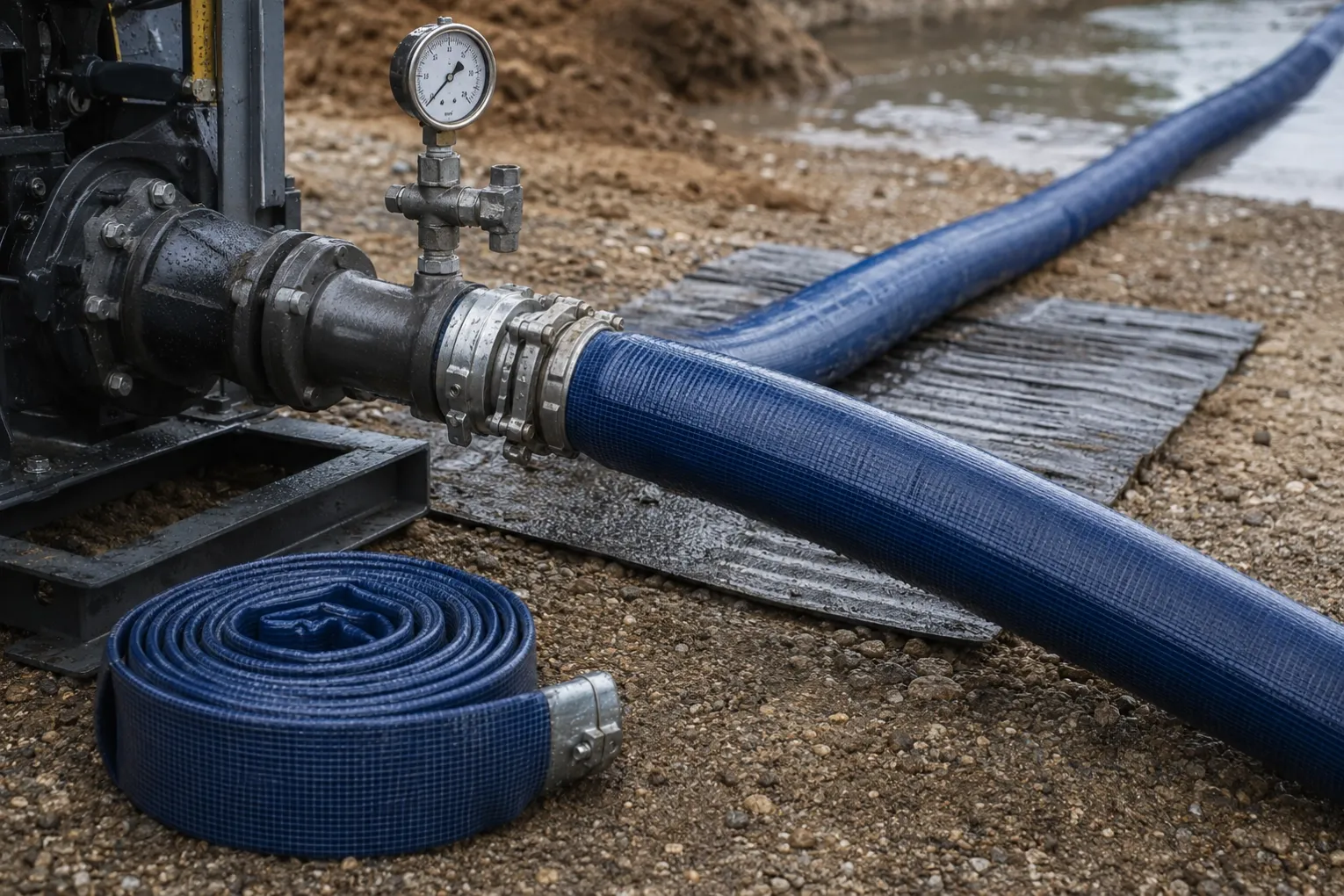
A complete RFQ should state application, medium, flow, inside diameter, working pressure, surge condition, total length, individual roll length, coupling, color, printing, packaging, quantity, destination and required inspection documents. This lets suppliers compare the same requirement and reduces revisions after quotation.
Quick selection answer
For agricultural irrigation or routine water transfer, begin with a PE woven layflat option when lightweight handling and abrasion exposure are central. For a higher-pressure lined construction, compare the documented PU- or PVC-lined product classes. For suction duty, use a hose designed to resist vacuum rather than a discharge-only layflat hose. Final selection must be checked against the actual pump, route, pressure and connection conditions.
Frequently asked questions
Can burst pressure be used as working pressure?
No. Burst pressure and working pressure describe different limits. Select from the documented working pressure and include surge conditions in the application brief.
Is a larger hose always better?
No. Diameter should be checked against required flow, route length, elevation and pump connections. Oversizing and undersizing can both create system and handling problems.
What information should be confirmed before ordering?
Confirm application, medium, diameter, working pressure, route and roll length, coupling, environment, color or printing, packaging, quantity, destination and documentation requirements.